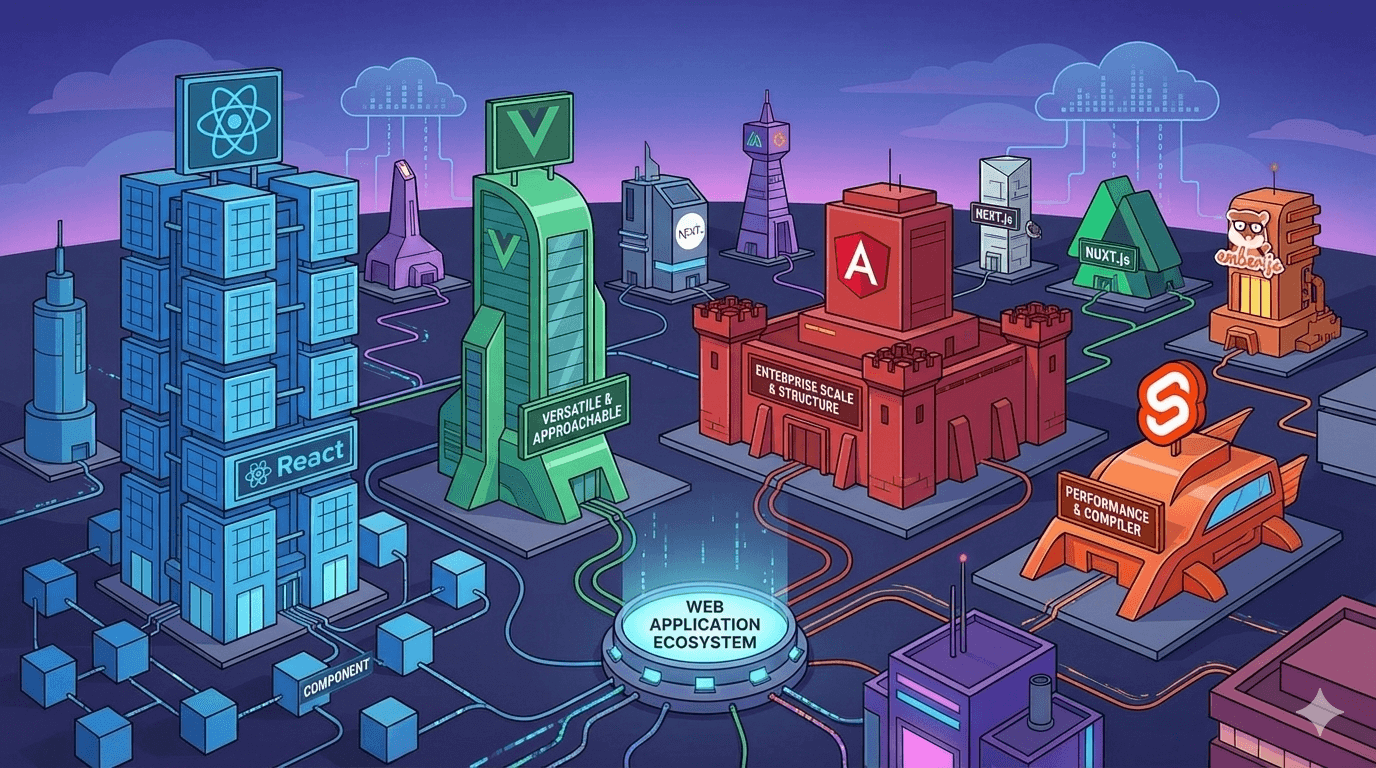
The frontend ecosystem looks crowded because these tools optimize different constraints: developer experience, team scale, bundle size, runtime cost, SSR/SEO, and long-term maintainability. There isn’t one “best” framework—there’s a best fit for your product and team.
Below is a practical mental model for what each is trying to be great at.
React: ecosystem + composability (the default for many teams)
React is the most common choice when you want:
- a huge ecosystem (UI libs, tooling, hiring pool)
- composable component patterns
- strong meta-framework options (Next.js, Remix)
React’s trade-off is that performance is often “opt-in” via good patterns (memoization, suspense boundaries, server components, etc.). It shines when you have a team and want a stable, well-supported path.
Vue: approachable + productive (great for mixed teams)
Vue is popular when you want:
- a gentle learning curve (especially for designers/FE generalists)
- a batteries-included feeling (SFCs, transitions, good defaults)
- a strong meta-framework (Nuxt)
Vue tends to feel cohesive and productive, especially for apps that want a clear “framework” experience without as much choice overload.
Svelte: compile-first, less runtime (small and fast-feeling)
Svelte compiles components at build time, aiming for:
- minimal runtime overhead
- simple reactivity model (less boilerplate)
- great DX for building interactive UI quickly
It’s a strong pick when you care about shipping crisp UI with smaller bundles and a simpler mental model. For fullstack SSR, most teams pair it with SvelteKit.
Qwik: resumability + instant interactivity at scale
Qwik is designed around resumability (restarting the app from server-rendered HTML without rehydrating everything). It’s built for:
- extremely fast initial interactivity
- large apps where hydration cost is painful
- “islands-style” interaction with fine-grained loading
Qwik is most compelling when you’re pushing performance constraints hard (marketing sites with heavy interaction, large e-commerce) and you want a framework that makes “ship less JS” the default.
Angular: enterprise conventions + batteries included
Angular is great when you want:
- strong conventions and structure for large teams
- a full platform: routing, forms, DI, HTTP, tooling
- long-term support and predictable upgrades
The trade-off is higher framework complexity and a heavier feel. It’s often a strong fit for enterprise dashboards and organizations that value standardization.
How to choose (quick decision guide)
Pick based on your bottleneck:
- Hiring + ecosystem + fullstack options → React (with Next.js/Remix)
- Balanced DX with strong conventions → Vue (with Nuxt)
- Smaller bundles + simple reactivity → Svelte (with SvelteKit)
- Performance under heavy hydration constraints → Qwik (with Qwik City)
- Large enterprise teams + standardized architecture → Angular
- Data-heavy UI needs (any framework) → add TanStack (Query/Table/Virtual)
A realistic recommendation for most teams
If you’re shipping a modern product in 2026 and you want the least risk:
- Choose a framework with a strong meta-framework (React+Next, Vue+Nuxt, Svelte+SvelteKit).
- Use best-in-class libraries for cross-cutting needs (TanStack Query, good component primitives, and solid testing).
Framework choice matters—but architecture, performance budgets, and UX discipline matter more.