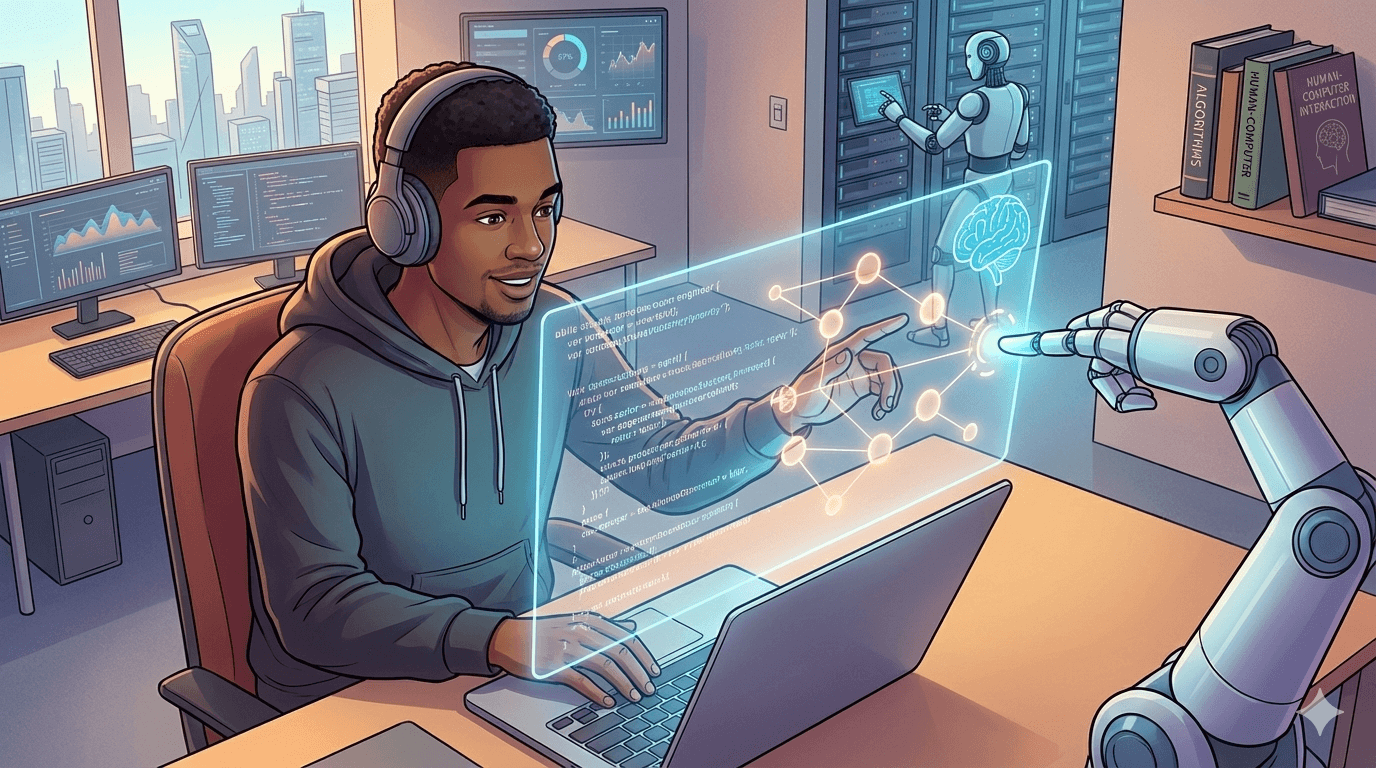
AI didn’t replace software engineering. It changed the cost of doing work: writing code is cheaper, iteration is faster, and expectations are higher.
“Good” engineers in 2026 are the ones who can use AI as an amplifier without sacrificing correctness, security, and clarity.
1) Keep the fundamentals as your operating system
The fundamentals didn’t change:
- Understand the problem before writing code.
- Make trade-offs explicit (time, scope, security, performance, maintainability).
- Communicate clearly with humans: requirements, risks, and progress.
- Own outcomes, not tickets.
AI makes output easier. It does not make judgment easier.
2) Treat AI like a powerful junior teammate
AI is excellent at generating drafts, options, and boilerplate. It’s weaker at:
- hidden requirements (“what the user actually means”)
- system-level consistency (cross-cutting concerns)
- correctness under edge cases
- security assumptions
Practical workflow:
- Ask for a plan and trade-offs first.
- Request a small patch (diff) instead of a big rewrite.
- Specify constraints: runtime, style guide, patterns in the repo.
- Make the model explain risks and failure modes.
3) Build a “verification muscle”
Your edge is not typing. It’s validation.
- Write/maintain tests that reflect user journeys.
- Use TypeScript and lint rules as guardrails, not bureaucracy.
- Reproduce bugs before “fixing” them.
- Validate security inputs: auth, rate limits, sanitization, CSP.
- Measure performance: do not trust “it should be fast”.
If AI wrote the code, you still own the bug.
4) Optimize for leverage, not busyness
In the AI era, the highest leverage skills get even more valuable:
- Debugging: isolate variables, reduce reproduction steps, verify hypotheses.
- System design: data model choices, boundaries, consistency, migrations.
- Product sense: build the right thing, not just “a thing”.
- Writing: specs, docs, changelogs, PR descriptions, incident notes.
- Reviewing: spotting subtle breakages and security issues quickly.
5) Make AI safe: privacy, IP, and security habits
Adopt simple rules:
- Don’t paste secrets, tokens, or private customer data into prompts.
- Assume AI outputs can contain insecure defaults.
- Prefer local tools when possible (especially for sensitive code).
- Add “security review” to your definition of done.
Being “fast” is meaningless if you ship a breach.
6) Show impact (especially for remote work)
Hiring managers don’t only want tools—they want proof you can deliver.
- Translate work into outcomes: latency reduced, conversions improved, incidents prevented.
- Keep a small “wins log” with metrics and links (PRs, screenshots, docs).
- Demonstrate remote readiness: async communication, ownership, reliable delivery.
AI can help produce artifacts (docs, summaries, reports). Use that advantage.
A simple checklist for every AI-assisted change
- [ ] Requirements are clear and written down.
- [ ] Risks/trade-offs are explicit.
- [ ] Edge cases considered (and tested if important).
- [ ] Security reviewed (auth, validation, rate limits, CSP).
- [ ] Observability considered (logs, analytics events, error states).
- [ ] The diff is small enough to review confidently.
AI makes it easier to ship code. Your job is to ship good software.